Marble or granite: what is the difference?
Compare the look, daily use and care before you choose stone for your home.
1. Start with the room
First, decide where the stone will go. A kitchen counter, a staircase and a bedroom floor have different needs. Think about water, dust, daily use and the cleaning you can manage.
Tell the supplier where you plan to use the stone. Ask about the actual material and finish being offered.
2. Compare the material
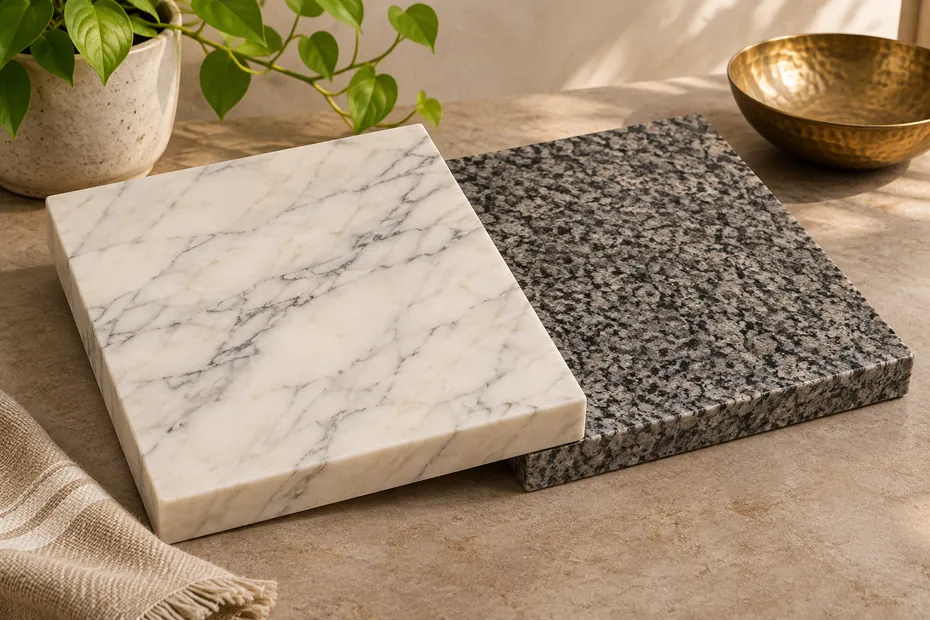
Marble often has flowing lines and a soft, natural look. Many granites have a grainy pattern and resist everyday wear well. Both can vary in colour and pattern.
Acidic liquids, such as lemon juice, can leave dull marks on marble. Granite also needs proper care. Neither material is safe from every type of damage.
3. See the actual pieces
A small sample or phone photo may not show the full pattern. Look at several pieces together, in good light. Ask which pieces you would receive.
Compare the finish too. A shiny surface may look different from a less shiny one. Ask which finish suits the place where you will use it.
4. Ask about care
Ask which cleaner to use and whether the stone needs a stain-protection treatment. A sealer may reduce staining, but it does not stop every stain or prevent acid marks.
Choose with the room, your budget and daily care in mind.
Compare the actual stone, its finish and where you will use it.
Further reading
Natural Stone Institute: marble ↗ (opens in a new tab)Natural Stone Institute: granite ↗ (opens in a new tab)Scientific and commercial names ↗ (opens in a new tab)General educational guidance. Discuss the actual material, finish and installation with a suitable supplier or installer for your project.
Have a requirement in mind?
Tell us what you are planning, or visit our premises to discuss it.